Keep the Internet Child Friendly

In December 2018, Oath (who is the owner of AOL and Yahoo) settled to pay $5 million for violating federal child privacy laws. The violation was in regards to their advertisement placements. AOL placed hundreds of advertisements on websites who’s target audience is under the age of 13 using personal data. The usage of personal data placed Oath in violation of the Children’s Online Privacy Protection Act of 1998 also known as COPPA. The purpose of COPPA is to prevent children’s personal data from being used by advertisers for target marketing.  

Since this ruling was handed down, more internet companies are making changes to their sites to create a more kid-friendly environment. An example of this is Tumblr’s decision to remove all adult content to make the site more inviting for all ages. A major part of this shift towards making the internet a better environment for children comes from data collected about children’s internet usage. Everyday approximately 170,000 children get on the internet for the first time each day, and according to eMarketers 83% of children interact daily with digital media and 70% are on social media daily.

YouTube has become the latest internet giant to take action towards protecting children who are on their site. Thursday, the company announced that they will be disabling comments on videos with children in them. This is a result of pedophilia behavior that has become a pattern on these types of videos. The reason for completely eliminating the comment section instead of censoring the language used is that some comments currently being left are words that would not necessarily be picked out as inappropriate. Additionally older minors who are also at potential risk of pedophile behavior will have their comments sections turned off as well. These efforts are being made with the intentions of protecting young children who use YouTube and to maintain a kid-friendly environment.

Vavra, Shannon. “YouTube disables comments on videos of children to root out pedophilia”. Axios. Retrieved from https://www.axios.com/youtube-disables-comments-young-children-videos-pedophilia-e95c0b9b-6a3d-420a-ac40-d4e9bdf5b7ef.html?

Fischer, Sara. “The internet reckons with kids”. Axios. Retrieved from https://www.axios.com/internet-kids-online-privacy-oath-payout-29b6a61c-637e-4650-afb5-a56da099e39b.html

Maheshwari, Sapna. “Oath Agrees to $5 Million Settlement Over Children’s Privacy Online.” New York Times. Retrieved from  https://www.nytimes.com/2018/12/03/business/media/oath-children-online-privacy.html?


Make it #relatable

Disruptive Advertising posted an article a couple months ago called “8 Viral Video Marketing Examples and What We Can Learn From Them”

I decided to piggy back off Abbey Lee’s prior blog post on assessing and expressing the benefits and advantages when marketing with video. Ana Gotter decided to show some examples of viral videos and analyze the strategies used for each in how it’s “viralness” was achieved.

Screen Shot 2019-03-03 at 10.37.29 PM.png

Here are a couple examples of what was included…

The first video she talks about is a “Dollar Shave Club” commercial which focused on humor and entertainment to grab attention. Dollar Shave actually gained 12,000 new orders within 48 hours from their video marketing. The second video is a Budweiser commercial sharing a “heartbreaking message about not drinking and driving” showing the perspective of a dog being left alone during the night after his owner decided to not drink and drive. This powerful message pulls on people’s ethos and compassion to not only be responsible with alcohol, but buy a responsible represented brand. The third video ranked is to advertise how GoPro’s incredible high quality fish eye software captured a fireman saving a kitten from a fire. This moving story turns heads and shows the power GoPro video has in durability, quality, and accessibility.

As I watched and read, all the videos use some sort of “connecting” emotion to bring traffic and exposure to whatever product their marketing. People listen when they seem known or when there is meaning. The top ranked viral videos all had some sort of relating factor. Whether compassion, justice, humor, or testimony – it’s universal. Which means universally, everyone can relate. And when you relate, you buy.

The article’s conclusion is that these videos all have something in common: none of the videos were controversial. None of the videos included were outrageous, they were relatable average emotions that make people feel familiar and comfortable.


What’s big in publicity this week…?

As weeks pass by, there is always a new publicity stunt to get someone’s name out there. While this has been going on for a long time one family that you can’t help hearing about is the Kardashian/Jenner’s. Their pictures are everywhere, they always have their hand in a different business, and just when you think you’ve gotten away from them another K pops up somewhere on social media. This week was no different, and the Kardashian/Jenner’s Momager, Kris Jenner, has perfected the “publicity stunt” for this family. While Public Relations has become a full time job for most companies, organizations, and people with a celebrity status, the KarJenners have decided to keep it in the family. Their mother has found a way to always get the attention back on her daughters and although it may come with its ups and downs, when was the last time you didn’t see Kardashian/Jenner on social media?

“What does Kris Jenner do to keep the fans entertained? Turn the show into a soap opera. It’s common knowledge that soap operas do very well when it comes to staying on air for a long period of time, so it was the perfect change for Keeping up with the Kardashians if they wanted to continue to make this show their career.”

Is she wrong for exploiting their lives this way? Is it just used to make them more famous than they already are? Is this a new wave of public relations?

https://medium.com/@greenieally/kris-jenner-the-marketing-mastermind-you-never-expected-f1889d83a37f

Job Searching in Austin

Last summer, I interned at the Texas Standard – and just over a week ago, I applied for a job there. It’s one of the few full-time jobs I’ve found in my job search, and I’m praying that I at least get an interview with them.

Finding a journalism/media job in Austin is just as difficult as it sounds. There’s quite a few opportunities, but a large percentage of them are part-time or they don’t pay as well as they could. I’ve worked multiple part-time jobs for the last three years and I don’t want to do it anymore. I need a full-time job.

Interning with the Texas Standard was one of the most amazing experiences and I would love the opportunity to do it again as an employee. I learned how to do everything they do, I even got to have my own reported story air on the show. I also produced news for the newscast host, Becky Fogel. Everything I’ve learned through my classes and my jobs directly transferred into their newsroom. I don’t even mind that I won’t be doing videography; I grew to love radio journalism just as much as TV news.

There are a few other jobs I’ve looked at in Austin; I’m going to apply for a couple of them within the next week or so. My goal is to get a full-time job that will be comfortable enough for me and my fiancé to afford living in Austin. Even if I get an interview with the Texas Standard and ultimately don’t get the job, I will be happy knowing they even considered me.

ASMR Internet Phenomenon

If you haven’t heard of ASMR until now then you are out of the loop. This phenomenon has taken the internet with its rise in popularity on youtube. For someone who’s unfamiliar with this phenomenon, it is hard to understand without feeling or listening to it.

Defined as a “calming, pleasurable feeling often accompanied by a tingling sensation”, ASMR, autonomous sensory meridian response, occurs in response to certain stimuli.

What triggers an ASMR response drastically varies from person to person, but some of the most common ones are said to include inherently soft sounds. These sounds can include white noise, whispers, chewing, tapping on hard surfaces, brushing sounds and even the sound of someone breathing. Don’t get me wrong this isn’t for everyone.

As it continues to grow in popularity it is starting to break into mainstream outlets. Advertisers have dabbled in the idea of ASMR, but have never fully committed to the idea. That all changed with Michelob Ultra’s commercial featuring Zoe Kravitz that aired during the Super Bowl.

“Michelob Ultra is hoping to stand out with a whispered message about its organic brew, Pure Gold, for its second Super Bowl spot. Actress Zoe Kravitz stars in the 45-second ad from FCB Chicago which uses quiet, deliberate sounds in the hopes to trigger ASMR (autonomous sensory meridian response) for viewers while also giving them a sense of how Pure Gold is different.”

Advertisers are always looking for a way to stand out and by capitalizing on social phenomenons they are able to reach new audiences. Not only does this reach the ASMR community, but brings it to a more mainstream audience. It will be interesting to see if more brands dabble in ASMR to make a new commercial sub-genre.

Non-alcoholic beer?

Heineken released a non-alcoholic beer in the United States in January and they are calling it the zero-alcohol beer. It has been pretty popular in Europe but is very new to America. They brew it almost identically to the normal beverage they are serving minus the alcohol. This product is very unique and most likely only applies to a very small market. Non-alcoholic beer drinkers only take up about 1% of the beer industry, so pretty small. I don’t really see how there is some untapped potential that Heineken could reach but obviously they do. So why zero-alcohol beer? Well apparently there are trends that actually cause the beer industry some trouble. One of these trends is called Dry January. Dry January is where people swear off alcohol for the month right after the holidays. This causes beer companies to suffer so this is why Heineken created this product. They want to reach the consumers who are giving up alcohol.

The other thing that makes this product unique is the way that Heineken has been advertising this product. They are using the hashtag, #NowYouCan, to show people that they can now essentially do things they weren’t allowed to do before. They say this drink is for situations where you can’t normally drink beer. For instance in one of their commercials they had someone in a business meeting drinking this beverage. I think this marketing strategy is genius because it is telling consumers that they are defying the man by drinking this. It is giving people a way to break the rules without actually breaking them. They give many other scenarios that involve rule breaking that also give the idea of people defying authority. I personally do not understand the drink but after reading about their marketing strategy I really want to try it now.

And the Magic-8 ball says….

Ad Age pulls out the magic-8 ball with their 2019 predictions for the advertising industry. I won’t go into all of them because they made a lot of them, but I found some interesting enough to write about.

Firstly, Ad Age predicts that brands will begin investing more in voice-overs, such as the house brand Alexa. In voice marketing strategies will increase. J.P. states that, “More than half of U.S. households will have a smart speaker by 2022.” The only thing that I am worried about is the ability to keep consumers’ privacy secured. I know people are worried about these type of machines being able to collect data. So further down the line when more of these type of brands are built, companies will have to build a way and promise a way not to collect data that disrupts consumer privacy.

Secondly, they predict that the term “attribution” in TV advertising will be a very overused phrase. Jeanine Poggi, senior editor, media and technology, makes an argument that “TV sellers will aggressively try to prove that commercials drive specific business results, like test-driving a car, or the ultimate holy grail—making a purchase.”

Read more 2019 predictions from Ad Age here: https://adage.com/article/cmo-strategy/ad-age-s-2019-industry-predictions/316142/

I am curious to  see if everything that Ad Age predicts will come true or not.

Modern Product Placement

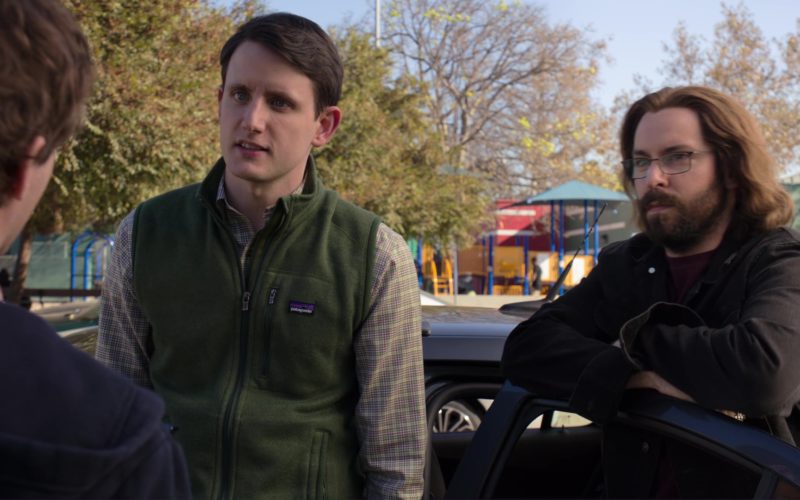
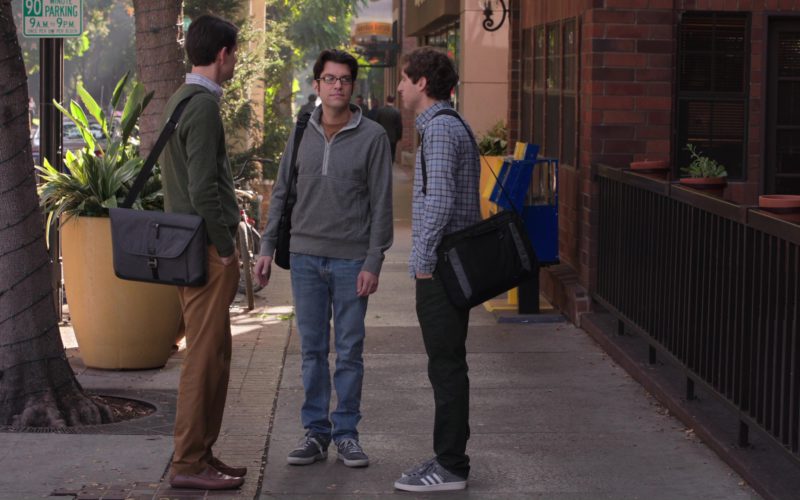
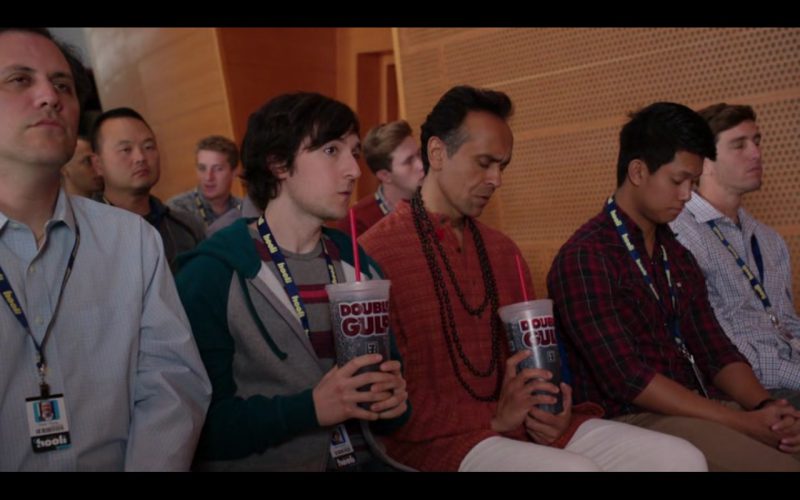
Since starting college, I was introduced to what is called “product placement,” which is when brands pay to have their logo/products in popular tv shows/movies. I’ve noticed product placement the most in one of my favorite TV shows – HBO’s Silicon Valley, which is about, you guessed it, a Silicon Valley startup. Silicon Valley is one of the most popular TV shows right now and are about to start their 5th season. Popular brands can be seen in all episodes. Since the show is centered around technology, almost all characters use an iPhone, most without a case so you know it’s an iPhone and Apple and Dell computers can be seen throughout. There are also Canon cameras, Tesla charging stations, and recognizable car brands such as Chevrolet, Tesla, Corvette, Cadillac and McLaren.

As far as costumes go, name brands can be seen throughout. In the Silicon Valley, where wealth is everywhere, you have to look your best and wear the nice brands. Some clothing brands seen throughout the show includes Patagonia, New Balance, Adidas, Converse, Puma and Nike.

Everyone has to eat, and some popular food and drink brands can be seen throughout. There are often Big Gulps and Cheez-Its on-screen in the offices, as well as popular alcohol and cereal brands.

It is very impressive to see the number of well-known brands in this show and this blog barely scratches the surface. The amount of money spent on product placement has to be astronomical. I believe it is effective for brands because it has a high chance to influence millions of viewer’s purchases.

Controlling Conversation in A Bold Way

A supply chain snafu caused a chicken shortage among UK KFC restaurants prompting some to close. This caused an uproar among chicken lovers to the point they were calling their local police. Not even kidding about that… What do you do when your chicken restaurant runs out of chicken? With the fast thinking of their marketing and public relations personnel, they created an apology ad that boldly owned up to the situation. The ad was in their brand red with their famous, trademarked chicken bucket, but their acronym was rearranged. FCK… Yup, I won’t spell that out, was the front of their bucket. The public response quickly changed to light-hearted joking after a few days of angry @ posts from their followers and consumers. KFC handled the situation in a way that proves they know their market. That bold of an ad would probably not work here in the US, but in Europe it just might and did.

The KFC ad copy said “A chicken restaurant without any chicken. It’s not ideal. Huge apologies to our customers, especially those who traveled out of their way to find we were closed. And endless thanks to our KFC team members and our franchise partners for working tirelessly to improve the situation. It’s been a hell of a week, but we’re making progress, and every day more and more fresh chicken is being delivered to our restaurants. Thank you for bearing with us.”

When bad thing happen to good companies it is important for that company to read the tone and anger of the backlash and own up to their mistake. KFC did just that and proved to be stronger than ever.

Griner, David. “The 25 Best Ads of 2018.” ADWeek. Retrieved from https://www.adweek.com/creativity/the-25-best-ads-of-2018/. Accessed on 2 March 2018.

Branding with Social Issues

Nike has been the subject of conversation among consumers and professionals as a strong brand and recently as a bold brand. They partnered with Colin Kaepernick and ended up being the unofficial sponsor of a social issues debate. They also suffered a blow to their brand when a college basketball player was hurt when his Nike shoe broke during the game. Now, they come out with another socially charged ad with the same director as the latest Gillette ad on toxic masculinity. Their new ad, played during the Oscars, was called “Dream Crazier” and featured female athletes. Serena Williams narrated the “call to action” and urges girls to believe in their “crazy” dreams even when society tells them that they should not dream big.

Nike said “Nike continues to champion female athletes and change the game for women in sports as it has for more than 40 years—inspiring and enabling female athletes of all levels to achieve their potential in sport and fitness.” 

The game of advertising is changing to brands associating themselves with social issues and promoting corporate social responsibility. We, as consumers, now have the task of determining if a brand is sincere or if the are doing it for their own benefit. It is probably a bit of both.

Monllos, Kristina. “Nike and Serena Williams Redefine What it Means to Call A Female Athlete Crazy.” ADWeek. Retrieved from https://www.adweek.com/brand-marketing/following-its-kaepernick-ad-nike-taps-serena-williams-for-a-stirring-celebration-of-women/. Accessed 2 March 2019